

Table of Contents
- What to Look for in Office Space Near SkyTrain Burnaby
- Side-by-Side Comparison of Burnaby Workspace Options
- Office Space for Rent Near SkyTrain: What Listings Really Cost
- Private Office Space Burnaby: Quiet Rooms for Client-Facing Work
- Coworking Space Burnaby: When a Shared Desk Beats a Private Door
- Flexible Office Space Burnaby: Scaling Without a Long Lease
- Station-by-Station Commute Guide for Burnaby Offices
- How to Verify Availability and Avoid Stale Listings
- Frequently Asked Questions
Last Updated: October 7, 2026
What to Look for in Office Space Near SkyTrain Burnaby
Finding office space near SkyTrain Burnaby starts with three filters: how close the building sits to a station, what class of building it is, and what the lease actually commits you to. Get those right and most of the hard work is done.
Transit proximity is not a marketing line. It decides whether your clients show up on time and whether your team stays.
Here is the shortlist we would run through before touring anything:
- Transit proximity: Is the entrance within a genuine walking distance, or a “close to transit” listing that means a bus ride first?
- Building class: Class “A” buildings with floor-to-ceiling windows and modern HVAC command higher base rent but reduce tenant complaints.
- Lease structure: Know your base rent, your additional rent, and your termination terms before you sign.
- Occupancy readiness: A suite that is “ready to occupy” saves you weeks of buildout and furniture sourcing.
Ask for the walk time from the building’s front door to the platform, not the drive time from the parking lot. We have seen listings shave four minutes off that walk in the copy alone.
Side-by-Side Comparison of Burnaby Workspace Options
Burnaby’s workspace market splits into four practical categories, and each suits a different kind of business.
| Option | Typical Setup | Best For | Watch For |
|---|---|---|---|
| Private office suite | Dedicated room, shared amenities | Client-facing practices, small teams | Minimum term length |
| Coworking desk | Shared open floor, hot desk or dedicated | Solo founders, remote workers | Noise and meeting-room limits |
| Serviced office | Furnished, reception included | Consultants needing a Class “A” address | What “all-inclusive” covers |
| Traditional lease | Empty shell, tenant builds out | Established firms with 5+ year plans | Additional rent and buildout cost |
The right column matters more than the left. A serviced office that includes utilities, internet, and reception often costs less per month than a bare lease once you add furniture, signage, and a receptionist.
Office Space for Rent Near SkyTrain: What Listings Really Cost
Listed rents for office space for rent near SkyTrain vary widely, and the headline number rarely tells the full story.
What matters is what the number excludes. A listing at a low monthly rate may leave you paying separately for parking, utilities, janitorial, and meeting-room time. A higher headline rate on a serviced or all-inclusive arrangement can land cheaper once those are bundled.
Base Rent vs Additional Rent: Reading the Numbers
On a traditional Burnaby lease, additional rent can add a meaningful percentage on top of base rent, and it is often estimated in year one then reconciled later. That reconciliation is where budgets break.
On a serviced or flexible arrangement, base and additional rent are usually folded into one monthly figure. You lose some control over the line items, but you gain a predictable number.
Signing a lease based on the estimated additional rent without asking for historical actuals is the most common costly mistake we see. The first reconciliation can arrive as an unwelcome invoice.
Private Office Space Burnaby: Quiet Rooms for Client-Facing Work
Private office space Burnaby tenants choose most often falls into two groups: practitioners who need confidential rooms, and small teams who need a door that closes.
For counsellors, therapists, and consultants, sound isolation is the deciding factor. An open coworking floor does not work for a client session, no matter how good the coffee is.
For teams of two to seven, a private suite with a shared meeting room gives you the professional image without paying for square footage you rarely use.
Coworking Space Burnaby: When a Shared Desk Beats a Private Door
Coworking space Burnaby works best when your work is mostly solo, your meetings are occasional, and your budget is tight.
It stops working the moment you need privacy. If your day includes confidential calls, client sessions, or focused deep work, a shared floor will cost you more in lost concentration than you save on rent.
Coworking also varies enormously in quality. Some shared floors are quiet and well-managed. Others are loud, oversubscribed on meeting rooms, and rarely cleaned. Tour at the busiest time of day, not the quietest.
Flexible Office Space Burnaby: Scaling Without a Long Lease
Flexible office space Burnaby is built for businesses that expect to change size.
This matters most for start-ups and growing SMEs. If you hire two people next quarter, you want to expand within the same building rather than move. If a contract ends, you want to downsize without a penalty.
Boss Business Centres offers flexible plans designed around exactly that question, with seamless scaling and expansion options inside the same building.
Station-by-Station Commute Guide for Burnaby Offices
Commute quality varies sharply by station, and the differences are practical rather than cosmetic.
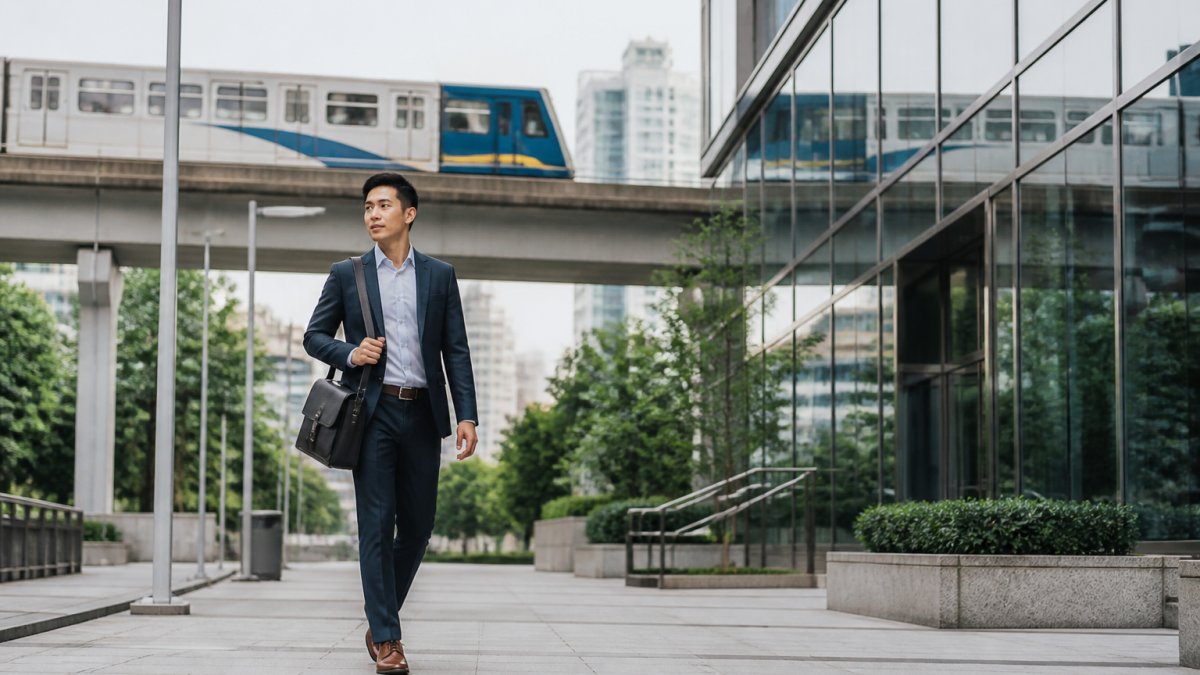
Here is how the stations compare for an office user, measured by the practical walk from platform to a typical office door:
- Brentwood Town Centre (Millennium Line): The strongest all-round option for client-facing businesses. The station sits directly inside a major mixed-use retail and residential complex, so a large share of surrounding office space is a two-to-five minute indoor or covered walk. Dining, banking, and services are at the door. The trade-off is peak-hour crowding and the highest parking demand of any station on this list.
- Gilmore (Millennium Line): Quieter than Brentwood with a shorter walk to the surrounding commercial blocks, typically three to six minutes. Good for teams that want transit access without the retail foot traffic. Fewer amenities immediately at the platform, so lunch options require a short walk.
- Royal Oak (Expo Line): A short walk, generally five to eight minutes, to the industrial-commercial pocket that mixes office and light operations. Useful for firms that need a yard, a loading area, or a warehouse-adjacent office. Amenity depth is thinner than Brentwood or Metrotown.
- Edmonds (Expo Line): Convenient for teams and clients arriving from the southeast, with straightforward connections onward. The walk to surrounding office space is often five to ten minutes, and the area is quieter with easier parking than the northern stations.
- Production Way-University (Millennium Line): The best fit for anyone commuting from the Tri-Cities along the Highway 1 corridor, with quick highway access for driving days and a direct connection to the SFU campus. The walk to nearby office space can run eight to twelve minutes depending on the building, so confirm the door-to-platform time before you commit.
- Metrotown (Expo Line): The busiest station in the region and the deepest concentration of Class “A” office towers, all within a short indoor walk of the platform. Best for teams that want maximum amenity and client convenience; worst for anyone who wants to park easily or avoid crowds.
A pattern worth noticing: the stations with the best retail and the shortest walks are also the busiest and the hardest to park at, while the stations with the easiest parking are the quietest and often the longest walk.
Two practical checks before you shortlist a building:
- Use TransLink’s trip planner to test the real door-to-door time from your home or your clients’ typical origin, not the listing’s estimate.
- Ask the building for the measured walk from the platform to the suite entrance, and walk it yourself at peak hour. A route that is pleasant at 10 a.m. can be a different experience at 5 p.m.
Match the station to your client base, not to your own commute. If most of your clients drive, a quieter station with parking beats a busy one with none. If they arrive by transit, the shortest covered walk wins.
How to Verify Availability and Avoid Stale Listings
Stale listings are the biggest time-waster in this market. A suite can show as available for months after it has been leased, and directory pages rarely update on the same schedule as the buildings themselves. The fix is to verify in a fixed order and to compare options on the same cost basis.
Verify in this order:
- Call the building directly and ask whether the specific suite is still available today
- Ask for the date the listing was last confirmed, not the date it was posted
- Request a tour within the same week, and treat a delayed tour as a signal
- Confirm the quoted rate in writing before you visit
- Ask what is included, in writing, before you compare two options
Comparing Options on the Same Cost Basis
The single most useful habit is to convert every option to a comparable monthly occupancy cost. Listings quote in different units, some per square foot per year, some as a flat monthly figure, so a direct comparison is misleading until you normalize them.
For a traditional lease, the true cost is base rent plus additional rent plus your own buildout, furniture, signage, and any parking or storage.
Confirming the Building Is Real and Established
For broader market context, BC Assessment’s property information lets you check a building’s assessed value and confirm you are dealing with a real, established property. For transit planning around a shortlisted address, TransLink’s trip planner gives you actual travel times rather than a listing’s estimate.
One more habit worth building: compare at least three options on the same criteria before deciding. Listing marketplaces let you filter by space type, location, and price, and some let you compare properties side by side.
A listing that will not confirm its rate or inclusions in writing before a tour is a listing to deprioritize. The buildings that are straightforward about their numbers are usually the ones that are straightforward about everything else.
Frequently Asked Questions
What should I look for when renting office space near SkyTrain in Burnaby?
Start with walking distance to the station, not just proximity on a map. A five to ten minute walk is realistic for most professionals. Check the building class, since Class A properties offer better amenities and natural light. Confirm what is included in the rent, such as utilities, parking, and maintenance. Ask about lease flexibility if your team size may change. Finally, visit in person to assess noise levels and cleanliness, because listing photos rarely capture the day-to-day experience of a workspace.
How do I compare office locations by walking distance to a SkyTrain station?
Map the route from the station entrance to the building door, not the straight-line distance. A listing may sit 300 metres from the track but require a longer walk around a block or over a crossing. Test the route at rush hour to see how it feels with foot traffic. Stations along the Expo and Millennium lines in Burnaby each have different street layouts, so a short distance at one stop may take longer at another. Verify the entrance you would actually use.
Is private office space better than coworking for a small business?
It depends on how you use the space. Private offices offer confidentiality, a fixed address, and a door you can close, which matters for counselling, legal, or client-facing work. Coworking suits solo professionals who want lower entry costs and a social environment. Many small businesses start in coworking and move to a private office once they hire or need consistent client meetings. Some centres offer both under one roof, so you can scale without changing your business address or commute.
What questions should I ask before signing an office lease?
Ask what is included in the base rent and what counts as additional rent, such as utilities, parking, and maintenance. Confirm the lease term, notice period, and whether you can expand or downsize within the building. Ask about guest access for client meetings, meeting room booking policies, and after-hours entry. Check who handles cleaning and repairs. Finally, ask for a written list of any one-time fees, so nothing appears on your first invoice that was not discussed upfront.
Can I rent a counselling room by the hour or day in Burnaby?
Yes, several Burnaby centres offer counselling or consultation rooms on hourly and daily terms, which suits practitioners who see clients part-time or are transitioning out of a home office. Hourly bookings usually include access to a waiting area and basic furnishings. Before booking, confirm the cancellation policy, sound insulation between rooms, and whether the room has a private entrance. If you expect steady weekly bookings, compare the hourly rate against a monthly private office, since the monthly option often costs less per session.