

Table of Contents
- Quick Comparison: Burnaby Counselling Office Options
- Therapy Office Rental Requirements in Burnaby
- Hourly Counselling Office Space vs. Monthly Rentals
- Benefits of Professional Office Space for Therapists
- Top Private Counselling Office Spaces in Burnaby
- Accessibility and Telehealth Infrastructure to Consider
- How to Choose the Right Therapy Space
- Conclusion
- Frequently Asked Questions
Last Updated: September 23, 2026
Quick Comparison: Burnaby Counselling Office Options
Finding the right private counselling office space in Burnaby means matching your practice model to the right rental format. This guide from Boss Business Centres breaks down each option.
Here is the short version:
| Option | Rental Model | Best For | Standout Feature |
|---|---|---|---|
| Boss Business Centres | Hourly and monthly | Counsellors wanting flexible, quiet rooms | Class “A” building, SkyTrain-connected |
| Therapy Space | Month-to-month membership | Fully furnished clinical setups | Turn-key rooms for mental health professionals |
| Central Park Business Centre | Private suite lease | Traditional, quiet office presence | Professional reception and secure access |
| Therapy Suites | Hybrid membership | Split in-person and virtual practices | Telehealth hours bundled in |
| Beta Collective | Flexible private office | Community-minded practitioners | Bright suites, collaborative atmosphere |
Therapy Office Rental Requirements in Burnaby
Most private practice leases involve three layers: the lease agreement, your professional insurance, and the physical standards your room must meet for clinical work.
Legal and Insurance Requirements for Sub-Leasing
Sub-leasing catches most practitioners off guard. If you rent within an existing practice or share space, your lease may restrict who can use the room and when. Review the sub-lease clause and confirm your liability insurance covers the specific address where you see clients.
Never see a client in a space before your liability insurance names that address. If a claim arises and the location isn’t covered, you carry the risk personally.
Privacy and Soundproofing Standards
Confidentiality is not optional, and thin walls undermine it fast. When touring, have someone speak at normal volume in the adjacent room while you stand in the counselling room. If you can make out words, the room is not client-ready.
Hourly Counselling Office Space vs. Monthly Rentals
The hourly versus monthly decision comes down to how many client hours you book each week. Hourly counselling office space suits practitioners building a caseload; monthly flat fees reward steady bookings. The answer often changes as your practice evolves.
When Hourly Rentals Make Sense
Hourly rentals work well when your schedule is uneven or you’re testing a new location: you pay only for the hours you use. Many practitioners start hourly and shift to monthly once bookings stabilize.
When a Monthly Flat Fee Saves Money
If you see clients most days, a monthly flat fee typically costs less per hour and gives you a permanent, personalized room. You can leave materials, control the setup, and stop re-booking the same slot weekly.
Hybrid Models and Telehealth Bundles
A growing number of providers offer hybrid memberships combining in-person hours with virtual office services or telehealth support. These suit practitioners who split their week between in-person and online sessions, or who want a professional business address without a full-time room.
Track your actual client hours for two months before choosing a model. Most practitioners overestimate how many hours they will book, and an hourly plan protects you from paying for capacity you do not yet need.
Questions to Ask Before You Commit
- Does the hourly rate include utilities, Wi-Fi, and cleaning, or are those billed separately?
- Can you block recurring slots, or is booking first-come, first-served?
- What is the cancellation policy if a client no-shows?
- Can you upgrade to a monthly plan without losing your preferred room?
- Are there minimum monthly commitments or setup fees?
The answers often matter more than the headline rate. A slightly higher hourly fee that includes utilities and reception may cost less overall than a cheaper room with add-on charges.
Benefits of Professional Office Space for Therapists
A dedicated office does more than provide four walls. The benefits of professional office space for therapists show up in client trust, your focus, and your practice’s credibility, clients read the environment as a signal of how seriously you take your work.
Interior Design for Therapeutic Alliance
The therapeutic alliance, the working relationship between you and your client, is shaped partly by the room itself. Soft lighting, comfortable seating at a natural angle, and muted colors help clients settle. Harsh overhead lights and clinical furniture create distance.
Keep a small, scent-free setup: a box of tissues within reach, a clock visible to you but not the client, and a white-noise machine outside the door. These details do more for the therapeutic alliance than expensive decor.
Top Private Counselling Office Spaces in Burnaby
Here are the spaces worth touring, starting with our top pick. Each serves a different practice, so match the option to your caseload rather than chasing the lowest rate.
Boss Business Centres
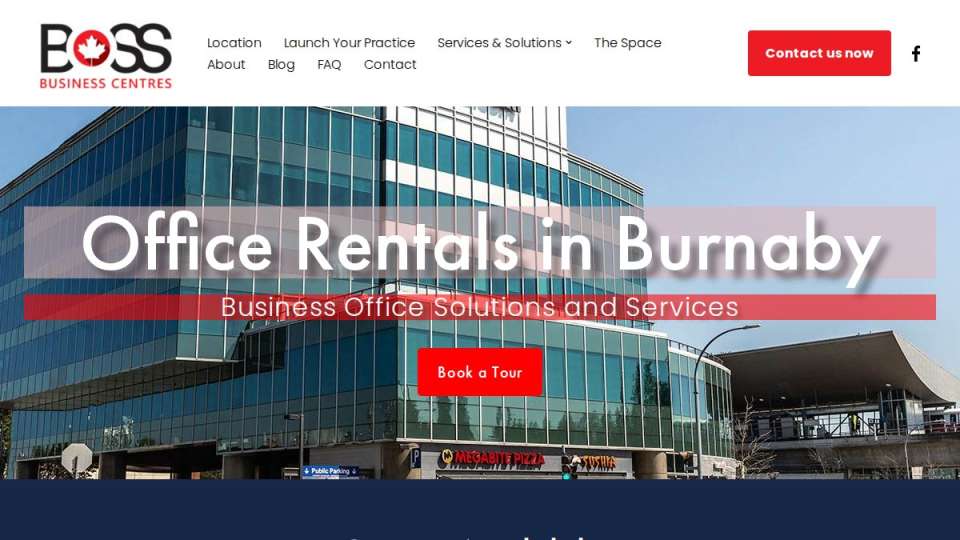
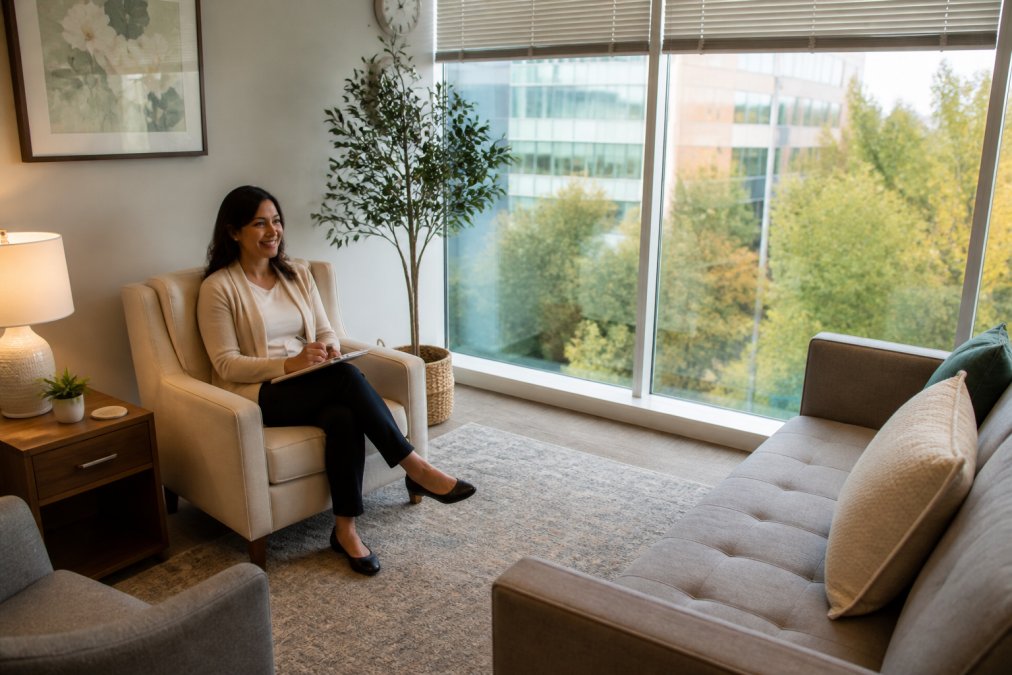
Boss Business Centres is our top pick for most counsellors because it balances quiet, professional space with flexible terms. A local, family-owned business for more than six years, it offers private offices and dedicated counselling rooms in a Class “A” building with floor-to-ceiling windows.
Therapy Space
Therapy Space focuses on mental health professionals, offering fully furnished, turn-key rooms with month-to-month memberships and a setup designed for clinical work. It suits practitioners who want to start sessions quickly without buying furniture. Availability varies by neighborhood, so confirm the location works for your clients.
Central Park Business Centre
Central Park Business Centre provides private suites and virtual office services with professional reception. The atmosphere is quiet and traditional, leaning less on coworking perks and more on a dependable, private setting.
Therapy Suites
Therapy Suites runs a hybrid model bundling private office hours with telehealth support and virtual office benefits. It fits practitioners who split their week between in-person and online sessions. Entry-level plans include limited in-person hours, so check whether your caseload fits the tier.
Beta Collective
Beta Collective offers bright private suites with high-speed internet and secure access in a community-driven setting. It may have fewer sound-dampening features than clinical-specific suites, so test the acoustics during your tour.
Accessibility and Telehealth Infrastructure to Consider
Accessibility and technology decide whether a space works for all your clients, not just the ones who drive. Here is what to verify on a tour.
Accessibility Standards and Inclusive Design
Accessibility starts with wheelchair access but does not end there. Look for step-free entry, an accessible washroom, and a private waiting area rather than a shared lobby bench. A room near the SkyTrain also removes parking stress for clients who don’t drive.
Telehealth Infrastructure Requirements
Telehealth-ready rooms need reliable high-speed internet and a neutral, well-lit backdrop for video sessions. If you run hybrid appointments, confirm the space supports both in-person and virtual hours without charging for unused time.
A practical checklist for telehealth readiness:
- Internet speed and reliability: Ask for the actual upload and download speeds, not just “high-speed.” Video sessions need stable upload bandwidth, and shared office networks can slow during peak hours.
- Sound dampening for virtual sessions: A room that is quiet for in-person work may still transmit background noise through a microphone. Test with a video call during a busy time of day.
- Lighting for video: Overhead fluorescent lights create shadows and glare. A room with soft, adjustable lighting or a window facing away from the camera produces a more professional image.
- Privacy for virtual sessions: If you conduct telehealth from the office, the room must be private enough that no one overhears client information. This is a professional obligation, not just a courtesy.
Hybrid Scheduling and Room Flexibility
If you split your week between in-person and virtual sessions, look for providers that let you book rooms hourly for in-person days while maintaining a virtual office address. Some memberships bundle telehealth hours with physical room access, simplifying billing.
Do not assume that a room marketed as “telehealth-ready” includes the infrastructure you need. Ask for specifics on internet speed, backup connections, and whether the room has a dedicated network or shares bandwidth with other tenants.
Questions to Ask on Your Tour
- Is the entrance step-free, and is the washroom accessible?
- What are the actual internet upload and download speeds in the room?
- Can I conduct virtual sessions from the room during my booked hours?
- Is the lighting adjustable, and can I control the temperature?
- Are there scent-free or quiet-floor policies in the building?
- How does the space handle privacy for clients in the waiting area?
These details separate a room that works for most clients from one that works for all of them, worth prioritizing over a lower rate.
How to Choose the Right Therapy Space
Choosing well means matching the room to your practice, not the other way around. Use this checklist on every tour:
- Test soundproofing with a normal-volume conversation through the wall
- Confirm your liability insurance covers the specific address
- Read the sub-lease and termination clauses before signing
- Check step-free access, washroom, and private waiting area
- Verify internet speed if you offer telehealth
- Ask exactly what the fee includes: utilities, parking, reception
- Confirm you can scale into a larger room as your caseload grows
The cheapest hourly rate rarely wins. A room that protects confidentiality, fits your clients’ access needs, and lets you grow without moving is worth more than a few dollars saved per hour.
Conclusion
The hardest part of private practice isn’t finding a room, it’s finding one that protects confidentiality and grows with you. Boss Business Centres offers private counselling rooms and offices in a Class “A” building with floor-to-ceiling windows, a high-powered HVAC system, and direct SkyTrain access, all on flexible plans without hidden fees.
Frequently Asked Questions
What amenities are essential for a private counselling office?
Essential amenities include a private waiting area, soundproofing, comfortable seating, and reliable internet for telehealth. A professional reception and secure building access also matter. Boss Business Centres offers a high-powered HVAC system and floor-to-ceiling windows in a Class A building, providing a clean, quiet environment. Ensure the space supports confidentiality and client comfort.
Is it better to rent a counselling office hourly or monthly?
Hourly counselling office space suits practitioners seeing a few clients weekly or just starting out. Monthly rentals offer cost predictability and a permanent professional address. Consider your client volume: if you see more than 15 clients weekly, a monthly flat fee often provides better value. Boss Business Centres offers flexible plans without hidden fees, so you can scale up or down as your practice grows.
What should I look for in a lease agreement for therapy office space?
Look for clear terms on rent, utilities, and maintenance. Check for hidden fees like parking or after-hours access. Confirm the sub-lease policy and insurance requirements. A flexible lease agreement should allow downsizing or expansion. Boss Business Centres provides transparent pricing and flexible plans, so you are not locked into a long contract that does not fit your practice.
Are there specific accessibility requirements for counselling offices in BC?
Yes, accessibility standards apply under the BC Building Code and the Accessible Canada Act. Counselling offices should have wheelchair-accessible entrances, washrooms, and hallways. Transit accessibility is also key. Boss Business Centres is connected to the SkyTrain, making it easy for clients using public transit. Confirm the space meets local accessibility and inclusivity standards before signing.
How can a professional business centre support a private practice?
A professional business centre provides a client-ready environment, reception services, and flexible rental terms. It handles maintenance and utilities, so you focus on clients. Boss Business Centres, a local family-owned business for over six years, offers a wellness community and scalable offices. This support helps therapists build trust and maintain a professional image without administrative burden.